

Choose Amsterdam Centrum when every minute of walking access matters; choose the Jordaan for canal-side character; De Pijp for food and evening energy; the Museum Quarter for art and a calmer base; or Oost when you prefer a neighbourhood feel and accept a short ride into the centre.
That is the useful answer, but Amsterdam neighbourhood names cover wide areas. A hotel at one edge of a district can work very differently from one at the other. Use this guide to narrow the area, then check the exact address against the tram or metro stops and the places you will visit most.
Amsterdam neighbourhoods at a glance
| Area | Best for | Main trade-off |
|---|---|---|
| Centrum / Canal Ring | First visits, short stays and walking to headline sights | More visitor traffic and nightlife activity; the exact street matters |
| Jordaan | Canal atmosphere, cafés and a central base with residential character | Popular streets can still be busy, and transit access varies by edge |
| De Pijp | Food, markets, bars and an energetic local routine | You will commute to some old-centre sights |
| Museum Quarter / Oud-Zuid | Museums, Vondelpark, families and quieter evenings | Less old-city atmosphere outside sightseeing hours |
| Oost | More space, green areas and a less visitor-centred base | Most first-time itineraries require more tram or bicycle time |
If this is a first Amsterdam trip of only two or three nights, Centrum or the Jordaan usually makes the simplest base. For a longer stay, De Pijp, the Museum Quarter and Oost become more attractive because the neighbourhood itself can carry part of the trip.
Centrum: best for a short first visit
Amsterdam’s official visitor site describes the Canal Ring and city centre as a tightly woven set of canals and micro-neighbourhoods within easy walking distance. This is the strongest choice when your plan revolves around the old city, canal cruises, central shopping streets, nightlife and quick access to Amsterdam Centraal.
Centrum is not one uniform experience. A room near Amsterdam Centraal, Dam Square, the eastern canal belt or Leidseplein can have a different walking pattern and evening atmosphere. Treat the exact street as part of the booking decision.
Choose Centrum if
- you have a short stay and want to minimise transit;
- several priorities sit inside or beside the Canal Ring;
- you expect to return to the room during the day;
- central nightlife or late dining is part of the trip.
Think twice if
Your ideal evening is quiet and residential, or you are willing to trade ten to twenty minutes of travel for more space. Before booking, look at the route from the exact property to your top three sights and scan recent property reviews for street-level noise reports. Do not assume every address labelled “city centre” offers the same night’s sleep.
Jordaan: best for canal atmosphere with a neighbourhood feel
The Jordaan is part of the wider centre, but it feels distinct from the busiest streets around Dam Square and Amsterdam Centraal. I amsterdam highlights its canal streets, terraces, small businesses, Noordermarkt and community character. It suits travellers who want the classic canal setting to continue after the day’s sightseeing.
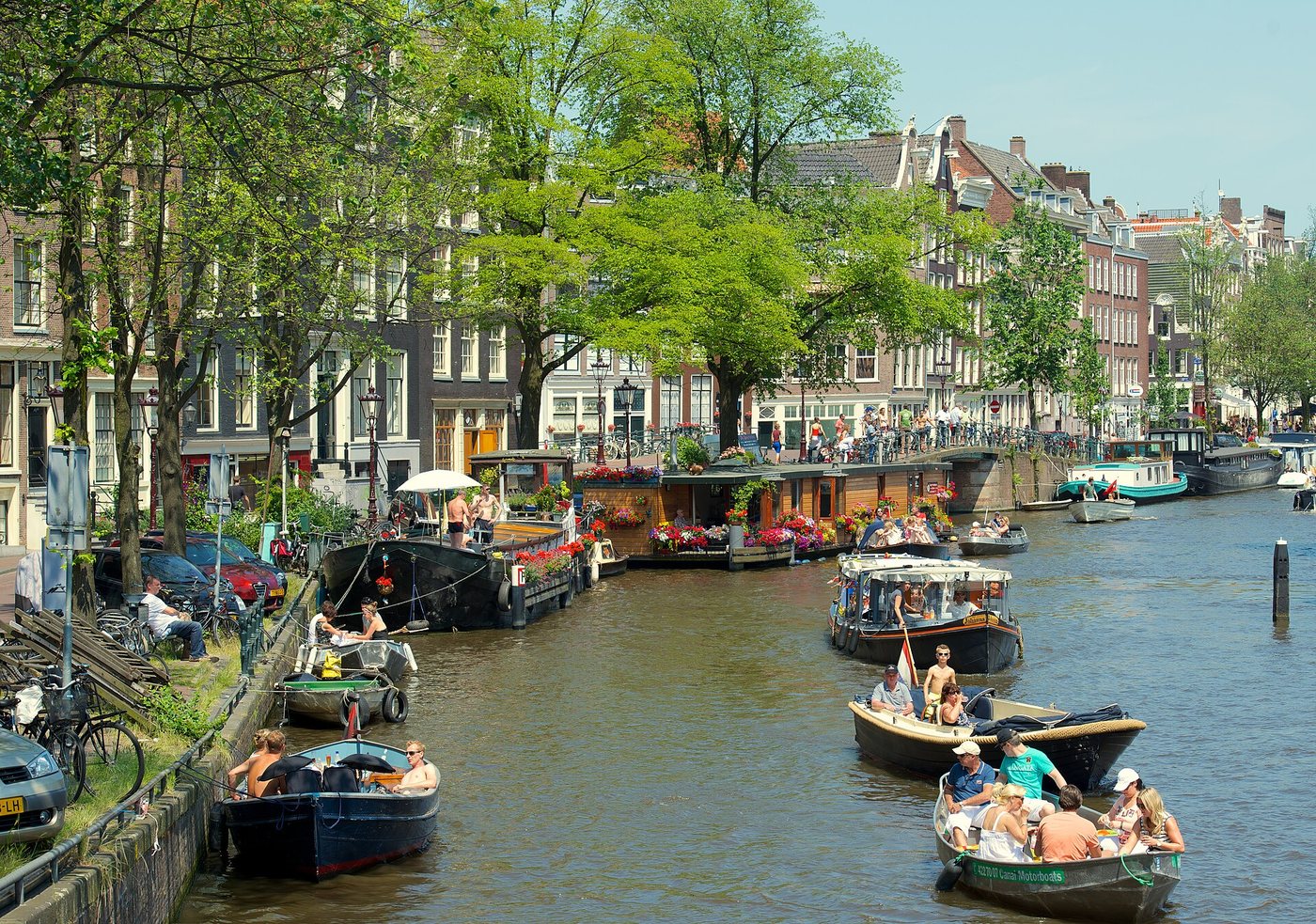
The area works especially well if your itinerary includes the western Canal Ring, the Anne Frank House area, Nine Streets and long walks through the old centre. Many central sights remain reachable on foot, but tram convenience changes from one side of the neighbourhood to another.
Choose the Jordaan if
- canal scenery is part of the stay, not just a daytime attraction;
- you prefer independent cafés and smaller streets to a large commercial centre;
- you want to walk into the old city while sleeping just outside its busiest core;
- you are comfortable comparing exact streets rather than booking by district name alone.
Main trade-off
“Jordaan” is often used broadly in accommodation listings. Pin the property on a map and check the real walk to the nearest useful tram stop. The most atmospheric canal streets can also attract visitors, so a Jordaan label is not a guarantee of silence.
De Pijp: best for food, markets and lively evenings
De Pijp makes sense when you want to build days around eating, cafés and a neighbourhood rhythm. The official guide points to Albert Cuyp Market, Sarphatipark and an unusually broad mix of cuisines and bars. It gives indicative journeys from the city centre of about five minutes by tram, ten by bicycle and thirty on foot.
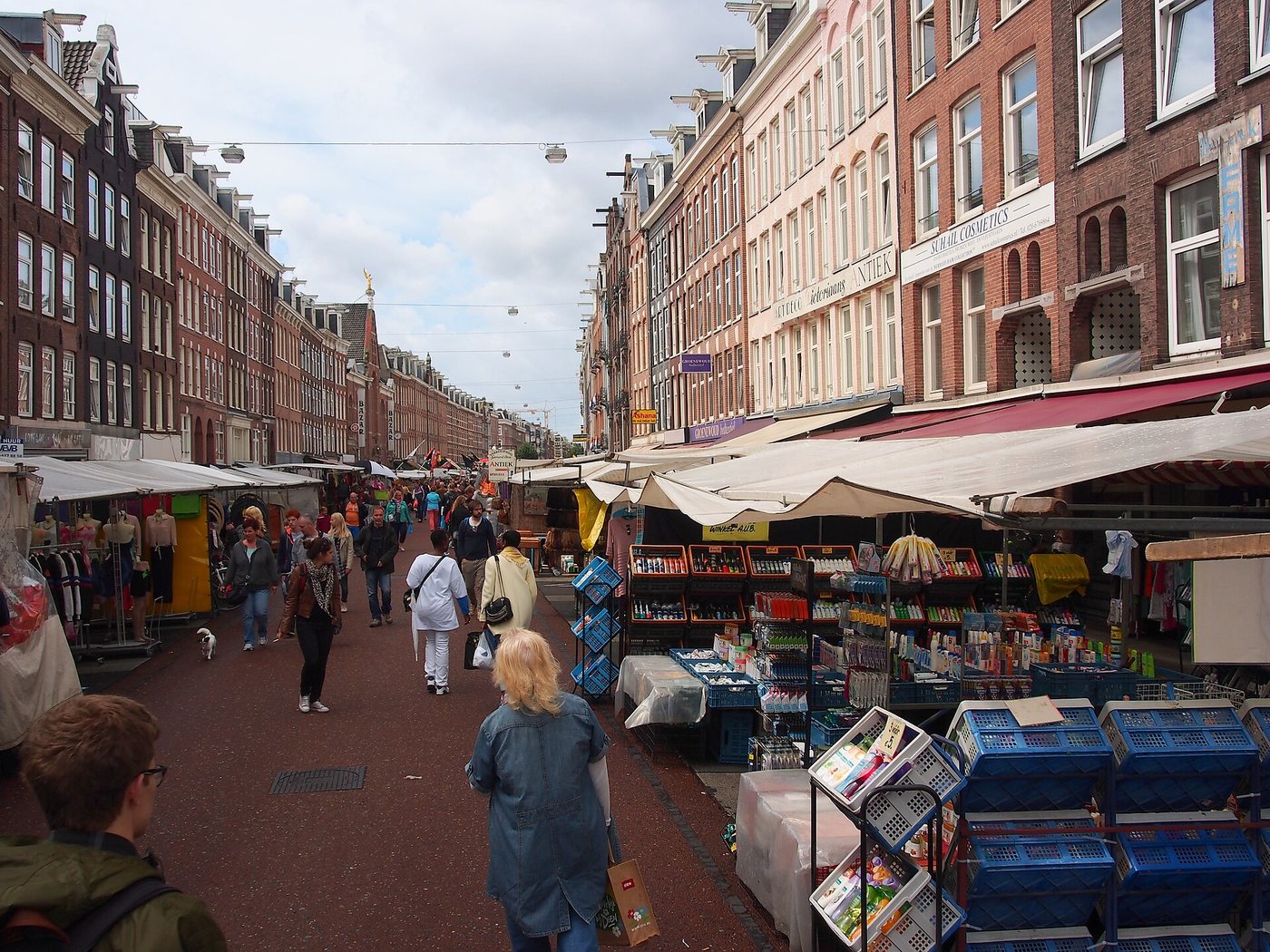
This is a strong compromise for travellers who want energy without sleeping in the historic core. The northern part of De Pijp also puts you close to the Museum Quarter. Farther south, the neighbourhood can feel more residential but adds time to some walks.
Choose De Pijp if
- restaurants, casual bars and market browsing matter every day;
- you are happy to use trams or the metro for some journeys;
- you want access to both the centre and Museumplein;
- a lively street scene is a benefit rather than a nuisance.
Main trade-off
De Pijp is not a shortcut to every attraction. Map your accommodation against the metro, tram lines and your actual itinerary. If early nights are important, compare the property’s street and room orientation rather than relying on a district-wide description.
Museum Quarter and Oud-Zuid: best for art and calmer evenings
Choose the Museum Quarter when the Rijksmuseum, Van Gogh Museum, Stedelijk Museum, Concertgebouw or Vondelpark anchors the trip. I amsterdam describes Oud-Zuid as elegant and leafy, with Museumplein at its cultural centre. Its neighbourhood page gives indicative travel times from the city centre of roughly twenty minutes by tram or bicycle and forty minutes on foot.
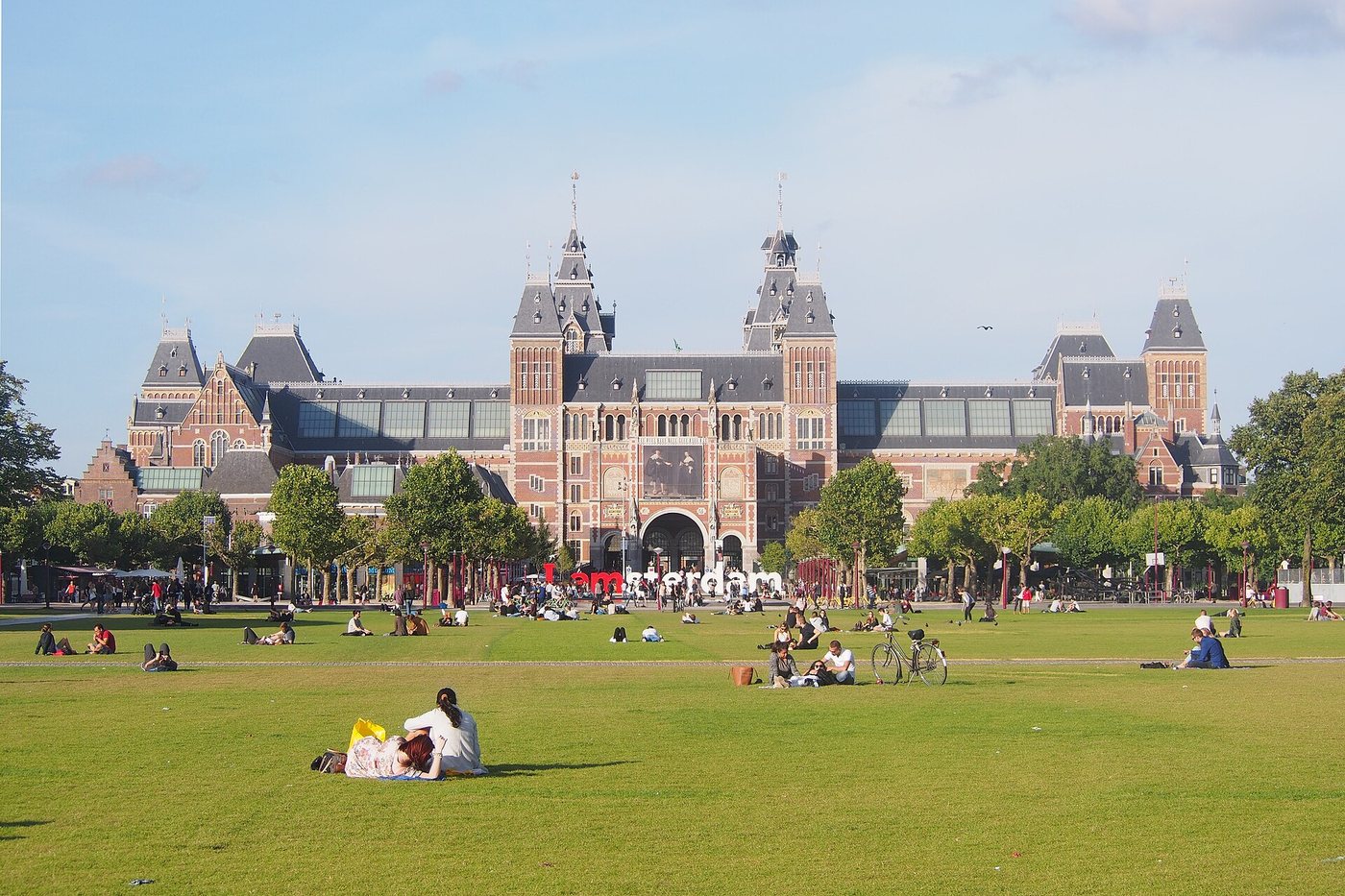
The practical gain is morning access to major museums and a calmer return after dinner. This can work well for families and travellers who prefer planned cultural days to late-night bar hopping. The wider Oud-Zuid area is large, so accommodation near Museumplein behaves differently from a property closer to the southern business district.
Choose the Museum Quarter if
- you have timed museum visits on more than one day;
- Vondelpark and quieter streets matter;
- you do not need the Canal Ring outside your door;
- you prefer to commute into nightlife rather than sleep beside it.
Main trade-off
You give up some spontaneous old-city wandering. Check the late-evening route back from your likely dinner areas and confirm that the exact property is genuinely near Museumplein if museum access is the reason you chose it.
Oost: best for more space and a local routine
Amsterdam Oost suits travellers who want markets, green spaces, neighbourhood restaurants and cultural venues without making the historic centre the whole trip. I amsterdam describes spacious streets, parks and a diverse food and cultural scene. Its indicative journey to the centre is about twenty minutes by tram, fifteen by bicycle or forty-five on foot.
Oost is a broad choice rather than a single hotel zone. The experience around Oosterpark, the eastern docks and the Indische Buurt differs, and the best fit depends on the tram or train line you will actually use. It rewards travellers who plan routes rather than judging distance only by a map’s scale.
Choose Oost if
- you are staying long enough to value a neighbourhood routine;
- parks, markets and food matter as much as old-city landmarks;
- you accept regular public-transport journeys;
- you want more separation between sightseeing and where you sleep.
Main trade-off
A first-time checklist concentrated in the Canal Ring creates repeated travel. Oost works better when at least some of your plans are in the east or when the accommodation sits beside a direct connection.
Which area fits your trip?
For a first visit of two or three nights
Start with Centrum or the Jordaan. The cost and room size still matter, but the main benefit is simple: less time spent repositioning between the station, the Canal Ring and major sights. Choose the Jordaan when atmosphere matters more than being at the absolute centre of the transport map.
For museums and family pacing
Start with the Museum Quarter. Morning museum access, Vondelpark and calmer evenings make the day easier to pace. Check that the property is close to the museums you actually booked; “Oud-Zuid” alone is too broad.
For restaurants and nightlife without the old-centre crush
Start with De Pijp. It has enough food and evening options to make returning to the neighbourhood worthwhile. If you plan very late nights in Centrum, compare the return route before committing.
For a longer stay
Compare De Pijp and Oost. Both can give the trip a local routine. De Pijp keeps more central energy; Oost offers more distance from the visitor core and may require more deliberate transport planning.
A five-minute booking check
- Pin the exact address. Neighbourhood labels can stretch beyond the part you imagine.
- Map three real journeys. Test the route to your first morning sight, a likely dinner area and Amsterdam Centraal or your airport connection.
- Check the last part on foot. A direct tram is less useful if the property still requires a long walk with luggage.
- Read recent room-specific reviews. Look for evidence about stairs, lifts, street noise and room orientation rather than broad opinions about Amsterdam.
- Recheck current transport information. Amsterdam has tram, metro, bus, ferry and train services, but maintenance and operating patterns change.
The practical answer
Book Centrum for maximum convenience, the Jordaan for canals and central character, De Pijp for food and energy, the Museum Quarter for art and calmer nights, or Oost for a longer, more neighbourhood-led stay.
The district narrows the search. The final decision should come from the exact address, the route to your real priorities and the kind of evening you want when the sightseeing ends.

.jpg)

