Two days in Athens are enough for the city’s essential ancient sites and a meaningful look at its living neighbourhoods, provided you resist turning the trip into a checklist. The practical choice is to keep the first day around the Acropolis and its museum, then use the second for the Ancient Agora and the historic centre. That order reduces unnecessary transport and leaves flexible time around the visits that need advance planning.
This itinerary is designed for a first visit at a moderate pace. It does not assume a particular season, ticket price or opening schedule. Confirm the official hours and timed-entry rules shortly before your trip, especially for the Acropolis archaeological site and the Acropolis Museum, which are separate attractions with separate tickets.
Two days in Athens at a glance
- Day one morning: Acropolis archaeological site.
- Day one midday: Acropolis Museum and lunch around Koukaki or Makrygianni.
- Day one afternoon and evening: Plaka, Anafiotika and Monastiraki.
- Day two morning: Ancient Agora and the Stoa of Attalos.
- Day two afternoon: Monastiraki, Psirri and the central city, with a museum or National Garden alternative.
- Day two evening: choose a central neighbourhood that fits your energy rather than crossing the city for one final stop.
The route works best if you stay near a metro station in the central area. You will still walk a great deal: archaeological ground can be uneven, central Athens has slopes, and the distance between stops adds up. Comfortable footwear and an intentionally light afternoon are more useful than squeezing in another ticketed site.
Before you go: book the fixed parts first
Begin with the Acropolis archaeological site because its official ticketing conditions determine the shape of day one. Use the official Hellenic Heritage booking route linked by the Ministry of Culture, then check the Acropolis Museum’s own website separately. Do not assume that a ticket for one includes the other.
The museum publishes different summer and winter hours and stays open later on some days. That can create a useful option: if an early Acropolis slot is unavailable, reverse the morning and museum portions only after confirming both official schedules. Keep the rest of the day flexible.
For transport, OASA publishes current visitor information for metro, tram, buses and trolleybuses. A short central itinerary may need only ordinary urban travel, while airport products and tourist passes follow different conditions. Compare the product you actually need on the official OASA site instead of buying a pass automatically.
Day one morning: make the Acropolis your fixed anchor
Give the Acropolis the first substantial block of the trip. An early visit often fits the rest of the route well because it places the most physically demanding stop before the museum and neighbourhood walking. Allow time for the ascent, security and unhurried views rather than scheduling the museum immediately after the entry slot.
The purpose of this morning is not to collect every nearby ruin. Focus on the Acropolis itself and use the viewpoints to understand the geography of the city: the historic centre lies below, the Ancient Agora sits to the northwest, and the modern city extends far beyond the postcard core. That orientation makes the next two days easier to read.
Who should slow the pace
Travellers with limited mobility, young children or low heat tolerance should leave a wider margin. The route includes exposed areas, slopes and polished stone. Check the official accessibility information for the exact date and treat any lift or access arrangement as something to verify, not assume.
Day one midday: choose depth at the Acropolis Museum
The Acropolis Museum is the logical second anchor because its collections add context to what you have just seen. The top-floor Parthenon Gallery is especially useful for understanding the monument beyond its exterior form, while the archaeological excavation beneath the museum adds another layer to the visit.
A realistic visit can take a substantial part of the middle of the day. If you enjoy archaeology, protect more time here and shorten the shopping or café portion later. If museums tire you quickly, choose a focused route through the major galleries and keep your energy for Plaka. The better decision is based on attention span, not on how many rooms a guide says you should complete.
Lunch nearby in Makrygianni or Koukaki keeps the day compact. Avoid building the plan around one named restaurant unless you have checked its current opening status and made any necessary reservation.
Day one afternoon: walk Plaka without trying to cover every lane
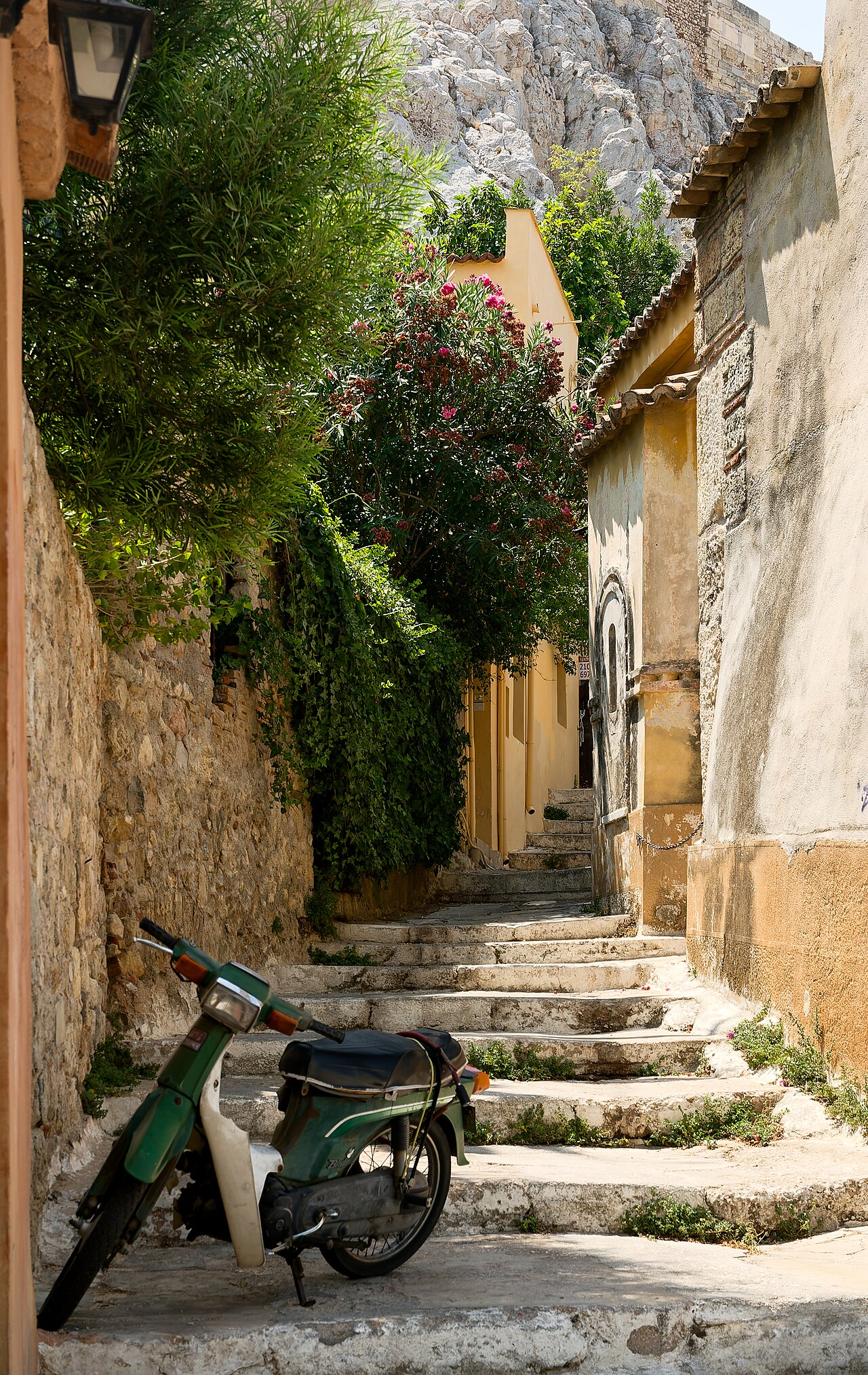
Plaka occupies the streets below the Acropolis and runs toward Monastiraki. The official city guide recommends experiencing it on foot, which suits this itinerary: after the museum, let the neighbourhood provide the flexible part of the day.
Move through the quieter upper lanes if your energy allows, then descend toward the busier commercial streets. Anafiotika is small and residential, so pass through respectfully and avoid blocking narrow lanes for photographs. Plaka is at its best when you allow room for a church, small museum, shaded square or view that was not on the schedule.
Plaka or Monastiraki for the evening?
Choose Plaka if you want a gentler finish close to the Acropolis. Continue to Monastiraki and Psirri if you prefer a busier mix of shops, street life, food and bars. The areas connect naturally on foot, so you can make the decision based on energy rather than committing before the trip.
Day two morning: understand civic Athens at the Ancient Agora
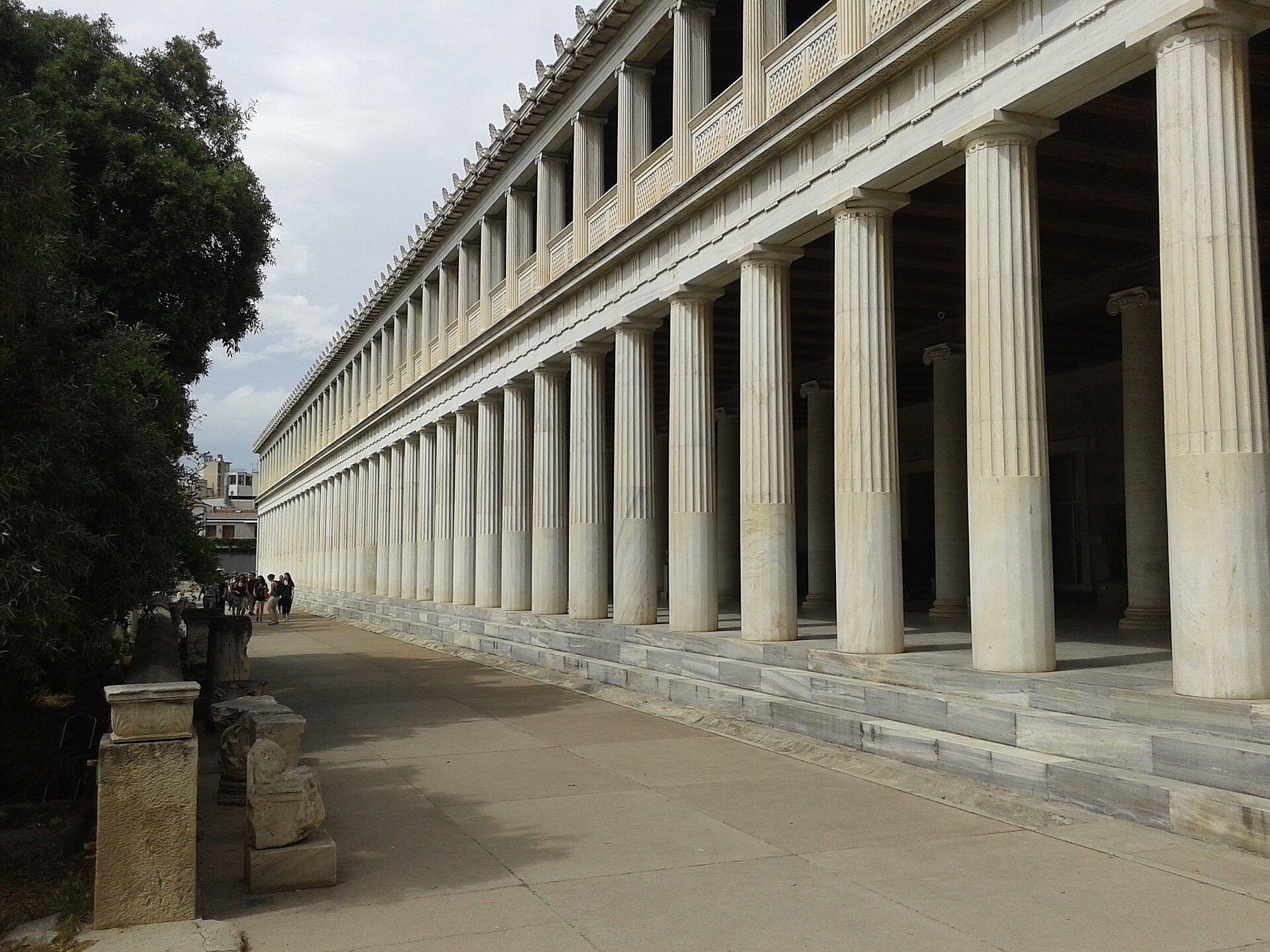
Start the second day at the Ancient Agora. Where the Acropolis expresses the city’s sacred and monumental side, the Agora helps explain public, commercial and civic life. The Stoa of Attalos gives the visit a strong architectural focus and contains the Museum of the Ancient Agora.
Do not force the Agora into a short gap between other bookings. The site covers open ground and rewards a slower walk. Confirm current opening information through the official heritage service, because seasonal hours and temporary changes can affect the order of the day.
Day two midday: connect Monastiraki with Psirri
Leave the Agora toward Monastiraki, where ancient, Byzantine, Ottoman and modern layers meet within a compact area. The square is also a major transport and orientation point. From there, continue into Psirri for lunch or a break.
This is the right moment to stop treating Athens as an archaeological project. Look at the workshops, street art, food businesses and reused buildings that make the centre a present-day neighbourhood. You can browse without promising yourself a long shopping session, then decide how ambitious the afternoon should be.
Day two afternoon: pick one of three finishes
Option one: stay history-heavy
Choose another central archaeological site or museum only if you still have the attention for it. Check the official ticket and closing time before committing. This option suits travellers whose main purpose is ancient history, but it can feel repetitive after the Acropolis, museum and Agora.
Option two: add modern civic Athens
Walk or take the metro toward Syntagma Square, then continue through the National Garden area. This gives the itinerary a modern civic counterpoint without a long journey. The official changing of the guard schedule or any special event should be checked close to the visit.
Option three: take a culture-first indoor finish
Use a museum with hours that fit your date, especially if weather or fatigue makes another outdoor site unattractive. The National Archaeological Museum, Benaki Museum and Museum of Cycladic Art offer different emphases, so choose one collection rather than selecting whichever name appears on the nearest list.
A trip to the coast or the Stavros Niarchos Foundation Cultural Center can be worthwhile, but it changes the character of a two-day first visit. Add it only if seaside or contemporary cultural space matters more to you than the central-city sequence. Otherwise, save it for a longer stay.
How to adapt the itinerary
If you have only one full day
Keep the Acropolis, Acropolis Museum and a Plaka-to-Monastiraki walk. Drop the Ancient Agora rather than rushing all four anchors. You will leave with a coherent view of the city instead of a series of hurried entrances.
If archaeology is your priority
Keep both mornings for the Acropolis and Agora, allow more museum time, and reduce the modern-city option. Verify every site separately because current official guidance indicates that nearby archaeological attractions may require individual tickets rather than one assumed combined pass.
If food and neighbourhoods matter more
Complete the Acropolis and one museum, then use more of day two for Monastiraki, Psirri and another central neighbourhood. Choose restaurants from current menus and opening information; this itinerary does not claim that a specific venue will suit every budget or date.
If the weather is difficult
Move an indoor museum into the least comfortable part of the day and preserve the archaeological site for the most suitable confirmed opening window. Official closures or heat measures override any itinerary. Avoid building a plan so tight that one changed entry time breaks the whole day.
Common planning mistakes
- Assuming one ticket covers everything: verify the Acropolis site, museum and other archaeological sites separately.
- Crossing the city for every recommendation: the strongest two-day route is compact and mostly central.
- Booking back-to-back timed visits: security, queues, walking and breaks make tight transfers fragile.
- Buying transport by habit: compare ordinary urban tickets, airport products and tourist products on OASA’s current pages.
- Treating neighbourhoods as filler: Plaka, Monastiraki and Psirri provide the living-city context that a monument-only plan misses.
- Ignoring seasonal changes: opening hours, last entry, weather measures and special events can alter the best order.
A practical booking order
- Confirm your two full sightseeing days and accommodation area.
- Check the official Acropolis archaeological-site ticketing page and choose the main day-one slot.
- Check the separate Acropolis Museum hours and ticket options.
- Verify the Ancient Agora’s current official hours for day two.
- Review OASA’s current ticket products for the journeys you will actually make.
- Keep neighbourhood time flexible and save live official pages on your phone.
This order protects the parts that can sell out or change while leaving enough freedom to respond to weather, energy and unexpected closures.
Continue planning a European city break
For another compact route, compare this plan with our two-day Prague itinerary. If Rome is next, start with the Fiumicino airport transfer guide. Travellers deciding on a neighbourhood-led stay can also use our Porto area comparison.
Official sources
- This is Athens: 48 Hours in Athens
- Hellenic Ministry of Culture: Acropolis of Athens
- Acropolis Museum: Plan Your Visit
- OASA: Visit Athens
- This is Athens: Plaka Guide
- This is Athens: Monastiraki and Psirri Guide
- Hellenic Heritage: Ancient Agora visitor information
Official information accessed 28 September 2026. Recheck ticket conditions, opening hours, last entry and transport products for your travel date.