For a first trip to Athens, stay in Koukaki or Makrygianni. They put the Acropolis, Acropolis Museum and pedestrian archaeological walk close enough to reach on foot, while Syngrou-Fix and Akropoli metro stations keep the rest of the city manageable. Choose Plaka if atmosphere matters more than quiet and value; Monastiraki or Psirri for late nights and direct airport-metro convenience; Syntagma for the easiest transport connections; or Kolonaki for a polished residential base away from the busiest visitor streets.
Athens is easier to choose than its map suggests. Most first-time sights lie in a compact centre, but the experience changes sharply over a few blocks: a room beside Monastiraki Square can hear nightlife long after midnight, while a Koukaki side street may feel residential. The best district is therefore not simply the one nearest the Acropolis. It is the one that matches your evenings, luggage and tolerance for hills and noise.
The short answer
| Area | Best for | Main compromise | Useful station |
|---|---|---|---|
| Koukaki / Makrygianni | Most first-time visitors | Some streets climb; not on the airport line | Akropoli or Syngrou-Fix |
| Plaka | Historic atmosphere and short walks | Crowds, steps and tourist pricing | Akropoli, Syntagma or Monastiraki |
| Monastiraki / Psirri | Nightlife, food and airport access | Noise and very busy streets | Monastiraki |
| Syntagma | Transport, short stays and late arrivals | Traffic and a businesslike feel | Syntagma |
| Kolonaki | Restaurants, museums and a calmer base | Hills and higher room rates | Evangelismos |
| Thissio / Petralona | Longer stays and local evenings | Less convenient for the airport | Thissio or Petralona |
| Piraeus | An early island ferry | Far from the central sights | Piraeus |
Koukaki and Makrygianni: the best all-round choice
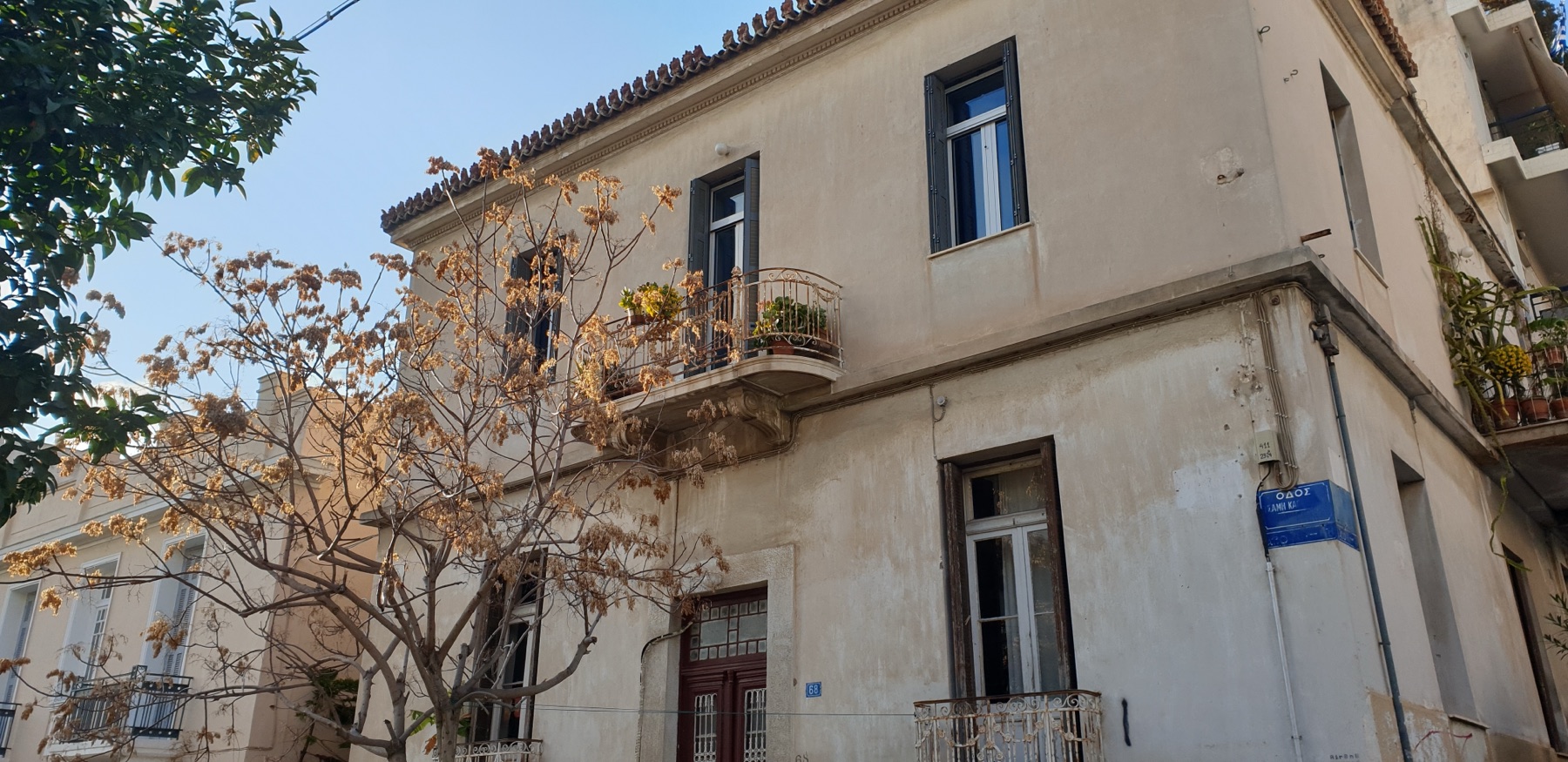
Koukaki sits south of the Acropolis, with Makrygianni between it and the Acropolis Museum. The city’s official guide describes the wider Acropolis-Koukaki district as transformed by the museum and the pedestrian route linking the ancient monuments. That geography is its great advantage: you can start at the Acropolis early, return to the room during the hottest part of the day, and walk out again for dinner.
Makrygianni is the more visitor-facing part, close to Dionysiou Areopagitou and Akropoli station. Koukaki becomes more residential as you move south and west, with cafes and apartment buildings around Drakou and Olympiou streets. Search near Akropoli if minimum walking matters; search nearer Syngrou-Fix for better metro access and often a little more separation from the sightseeing crowds.
Choose it if: this is your first visit, you want to walk to the major ancient sites, or you prefer neighbourhood evenings to a dedicated nightlife district. Avoid it if: a direct metro to the airport is essential; Line 2 requires a change at Syntagma.
Plaka: prettiest, closest and busiest
Plaka hugs the base of the Acropolis and runs towards Monastiraki. The official Athens guide calls it the city’s most famous neighbourhood and warns visitors to expect crowds. Its lanes, neoclassical buildings, small churches and glimpses of the Acropolis create the version of Athens many people imagine before arrival.
That atmosphere is real, but so are the compromises. Anafiotika and the upper lanes involve steps, cobbles and slopes. A taxi may not reach a pedestrian address. Restaurants and souvenir shops draw day visitors, and rooms with a landmark view can cost more than equally comfortable choices a few streets away. Check the exact entrance on a map, not just the hotel’s “Plaka” label, and ask whether there is a lift if stairs are difficult.
Choose it if: you have one or two nights, want to walk out into the historic centre, and accept a premium for location. Avoid it if: you are sensitive to street noise, travel with heavy luggage, or want a strongly residential neighbourhood.
Monastiraki and Psirri: best for nightlife and airport convenience
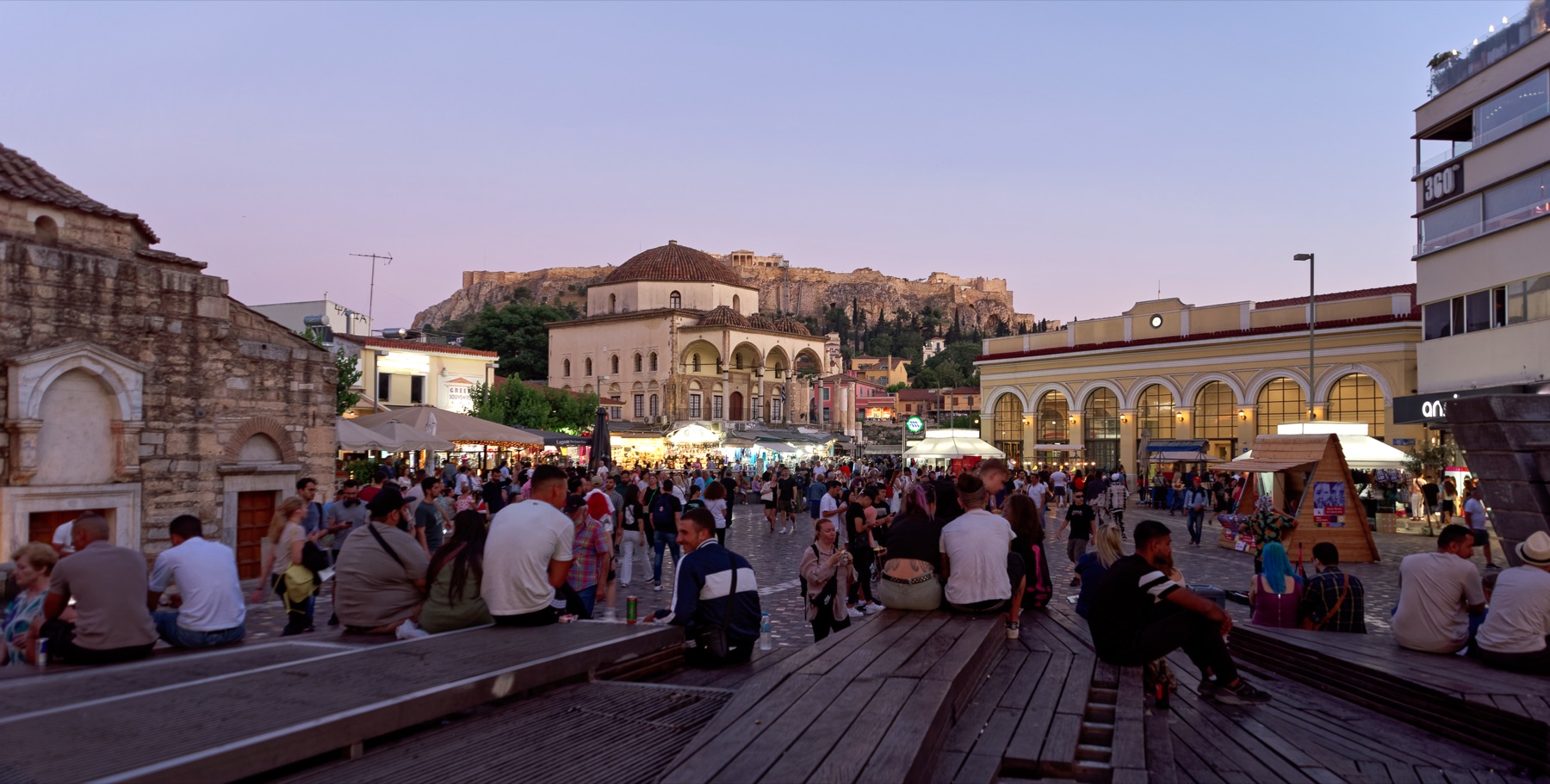
Monastiraki is a transport and visitor hub where the flea-market streets, ancient sites and shopping axis meet. Psirri lies immediately to the north-west, with bars, restaurants and small craft shops. The official neighbourhood guide describes old and new Athens converging here and notes the cluster of hip bars and student cafes around Iroon Square.
Line 3 links Monastiraki with the airport, while Line 1 runs towards Piraeus. That makes the area unusually practical for a short city-and-island trip. It is also one of the least forgiving places for light sleepers. The square, rooftop bars and Psirri’s late restaurants can stay lively; a hotel’s double glazing and room orientation matter more than its star rating.
Choose it if: you want restaurants and bars outside the door, a direct airport train, or quick access to both central sights and Piraeus. Avoid it if: quiet nights are the priority. Request a room away from the street and rooftop venues if you do stay.
Syntagma: the practical transport base
Syntagma Square is not the most atmospheric answer, but it is often the most efficient. Lines 2 and 3 meet here, airport buses terminate nearby, and Plaka, the National Garden, Ermou shopping street and several major museums are walkable. It works particularly well for a late arrival, an early departure or a stay built around day trips.
The airport metro fare is €9 one way and the airport express bus is €5.50, according to OASA’s current fare page. A normal 90-minute urban ticket costs €1.20, and a 24-hour product costs €4.10. OASA also lists a €20 three-day tourist ticket including one return airport journey. These fares were checked on 22 November 2026 and can change.
Syntagma’s drawbacks are traffic, demonstrations that can temporarily change road access, and a less intimate feel than the lanes around the Acropolis. Look south or east of the square for easier access to the National Garden and quieter blocks; the western edge merges quickly into the busiest shopping streets.
Kolonaki: polished, museum-friendly and hilly
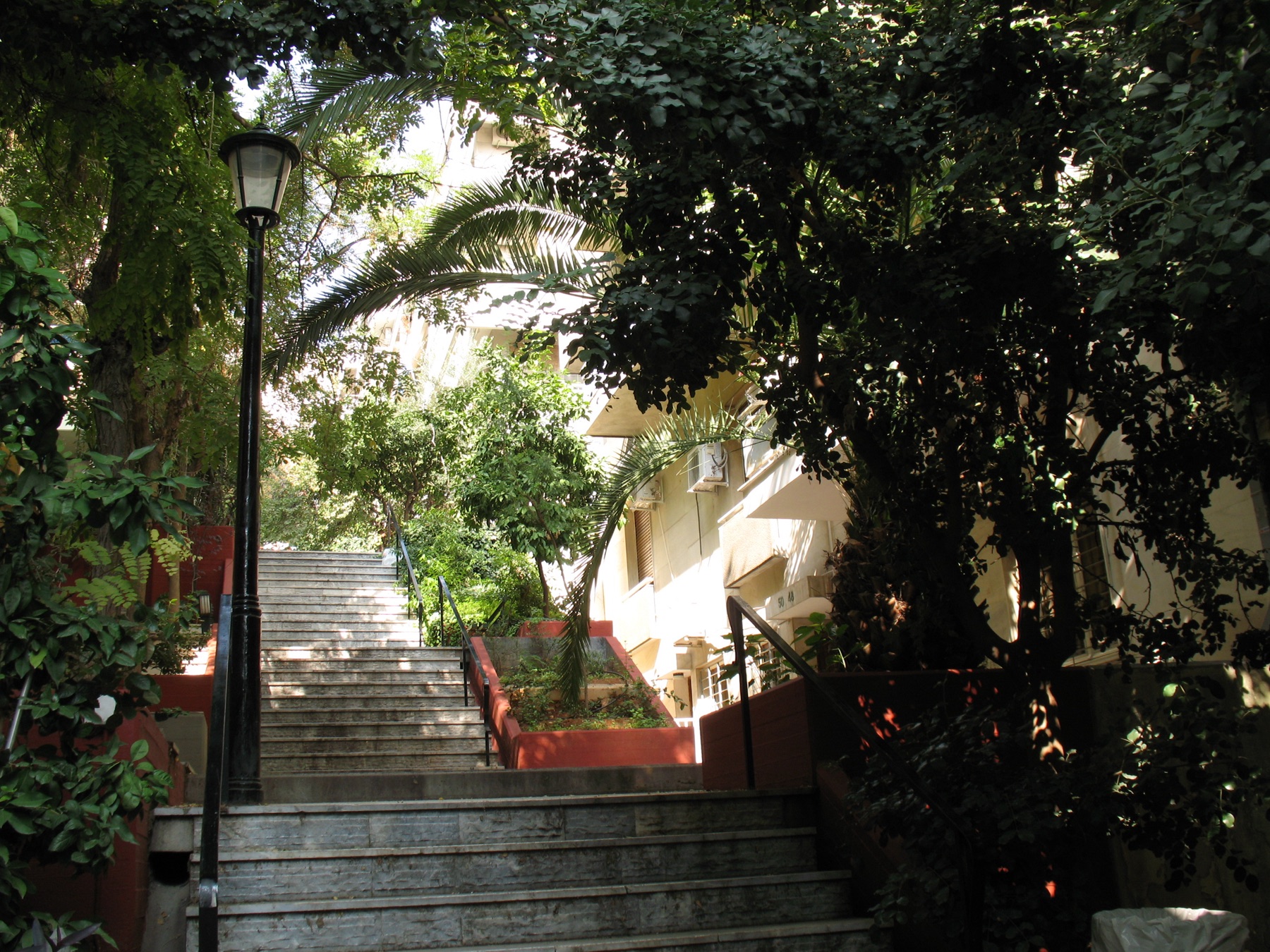
Kolonaki climbs the south-west side of Lycabettus Hill. Visit Greece points to Vasilissis Sofias Avenue and the concentration of museums around it, including the Museum of Cycladic Art, Benaki Museum and Byzantine and Christian Museum. The neighbourhood suits travellers who prefer smart restaurants, boutiques and residential streets to souvenir shops and bar crawls.
Evangelismos station on Line 3 is the useful anchor. The lower streets near the station are easier with luggage; addresses higher towards Lycabettus may involve steep walks or steps. The Acropolis is not far in kilometres, but the return climb can make a taxi or metro more appealing after a full sightseeing day.
Choose it if: museums, dining and a calmer evening are more important than being beside the ruins. Avoid it if: hills are difficult or you want budget accommodation.
Thissio and Petralona: for a longer, slower stay
Thissio faces the archaeological park and has a direct walking route towards Monastiraki. Petralona stretches farther south and feels more residential, with local restaurants and fewer sightseeing groups. The official Athens guide groups the two together, while the national tourism site includes them within the wider historic-centre story.
This is a useful compromise for repeat visitors and week-long stays: central enough to walk or take Line 1, but removed from the densest hotel zone. Pay attention to which side of the railway and how far south the property sits. “Petralona” can describe an address that is no longer a quick walk to the Acropolis.
When to stay in Piraeus instead
Piraeus is a separate port city within the Athens urban area, not a substitute for the centre on a normal sightseeing trip. Stay there when an early ferry makes the port the first priority, particularly if the sailing requires check-in before central public transport is convenient. Confirm the exact gate: the passenger port is large, and a hotel near one side may still be a taxi ride from your ship.
For most city breaks, central Athens is better. Line 1 connects Monastiraki and Piraeus, and Line 3 also reaches the port, so you can usually travel down on the day. If you split the stay, put the Piraeus night immediately before the ferry rather than commuting back and forth.
Areas to approach with extra care
Omonia and Metaxourgeio often appear in cheaper searches. Both are central and both contain perfectly ordinary hotels and active streets, but the experience varies block by block more than in Plaka or Koukaki. The official Athens guide treats Omonia as an eclectic neighbourhood rather than a no-go zone. Still, first-time visitors arriving late should inspect recent property reviews, the exact walking route from the station and the immediate street on a map before booking.
This is not a claim that an entire district is unsafe. It is a practical warning that a low price and “central Athens” label do not describe the nighttime walk, noise or street environment. The same block-level check is useful everywhere.
Five booking checks that matter in Athens
- Measure the route, not the district name. Hotel marketing stretches neighbourhood boundaries. Map the door to the station and to the first sight you will visit.
- Read the newest noise reviews. Search for “bar”, “rooftop”, “street” and “soundproofing”, especially in Monastiraki and Psirri.
- Check hills, steps and lifts. Plaka, Anafiotika and Kolonaki can make a short distance difficult with luggage or limited mobility.
- Confirm air conditioning and its dates. Do not assume a listed system operates year-round or independently in every room.
- Match the final night to the departure. Use Monastiraki or Syntagma for the airport; consider Piraeus for a very early ferry.
Our recommendation
Book Koukaki or Makrygianni for the safest first-time choice, ideally within a ten-minute walk of Akropoli or Syngrou-Fix station. Book Monastiraki only when nightlife and direct airport access outweigh noise. Pick Plaka for atmosphere, Syntagma for transport, and Kolonaki for restaurants and museums. Athens rewards a precise address more than a fashionable district name, so make the final decision at street level.
Official sources
- The Official Athens Guide: choose a neighbourhood
- The Official Athens Guide: neighbourhood overview
- The Official Athens Guide: Plaka
- The Official Athens Guide: Monastiraki and Psirri
- Visit Greece: neighbourhoods in Athens
- OASA: current ticket prices
Featured image: restaurants on the stepped Mnisikleous Street in Plaka, photographed in June 2024. Photo: Jakub Hałun, CC BY 4.0, via Wikimedia Commons. Images are resized from the originals. Sources accessed 22 November 2026. Transport fares and services can change; check the official pages before travel.