For most first visits to Budapest, stay on the Pest side in District V, between the Parliament and Deák Ferenc tér. Pick District VII if nightlife is part of the plan and you can live with late-night noise, District VI around Andrássy út for a central but slightly calmer base, and the Buda Castle Quarter in District I only if a quiet, historic setting matters more than easy transport.
Budapest is two old cities joined across the Danube, and where you sleep shapes your trip more than the map suggests. Pest is flat, dense and full of metro lines; Buda rises into hills. This guide compares the main areas, explains how each one connects to the airport, and gives a simple way to decide. Transport details come from Budapest Airport’s official site and visitor information from the city’s official tourism site, both checked on 31 October 2026.
Budapest areas at a glance
| Area | Best for | Main trade-off |
|---|---|---|
| District V (Belváros-Lipótváros) | First visits and short stays; walking to the Danube, the Parliament and the Chain Bridge | Higher prices and busy tourist streets |
| District VII (Erzsébetváros, the Jewish Quarter) | Restaurants, ruin bars and nightlife on your doorstep | Noise late into the night, especially at weekends |
| District VI (Terézváros, around Andrássy út) | A central base on the M1 metro, closer to City Park | Busy main avenues; the best spots are a few streets back |
| District VIII (the Palace District) | Cafés and squares close to Kálvin tér and Astoria | A smaller, more local area with fewer big sights inside it |
| District I (Buda Castle Quarter) | Quiet evenings and a historic setting with views | A hilltop with no metro station; more time getting around |
District V: the easiest first-time base
District V is the inner city on the Pest bank of the Danube. It contains the Parliament, the riverside promenade and the Pest end of the Chain Bridge, and it reaches Deák Ferenc tér, the transport hub where three metro lines meet. UNESCO lists the banks of the Danube as part of Budapest’s World Heritage site, and many visitors spend most of their first trip within walking distance of them.
Staying here means you can walk to the river, cross to Buda on foot and reach most of Pest by metro without long transfers. The cost is price and crowds: rooms near the river and the main shopping streets tend to be the most expensive in the city, and the busiest streets are full of visitors well into the evening.
Choose District V if this is your first visit, you have two to four nights, and you want the airport bus, the metro and the river all close by.
District VII: the Jewish Quarter and the nightlife district
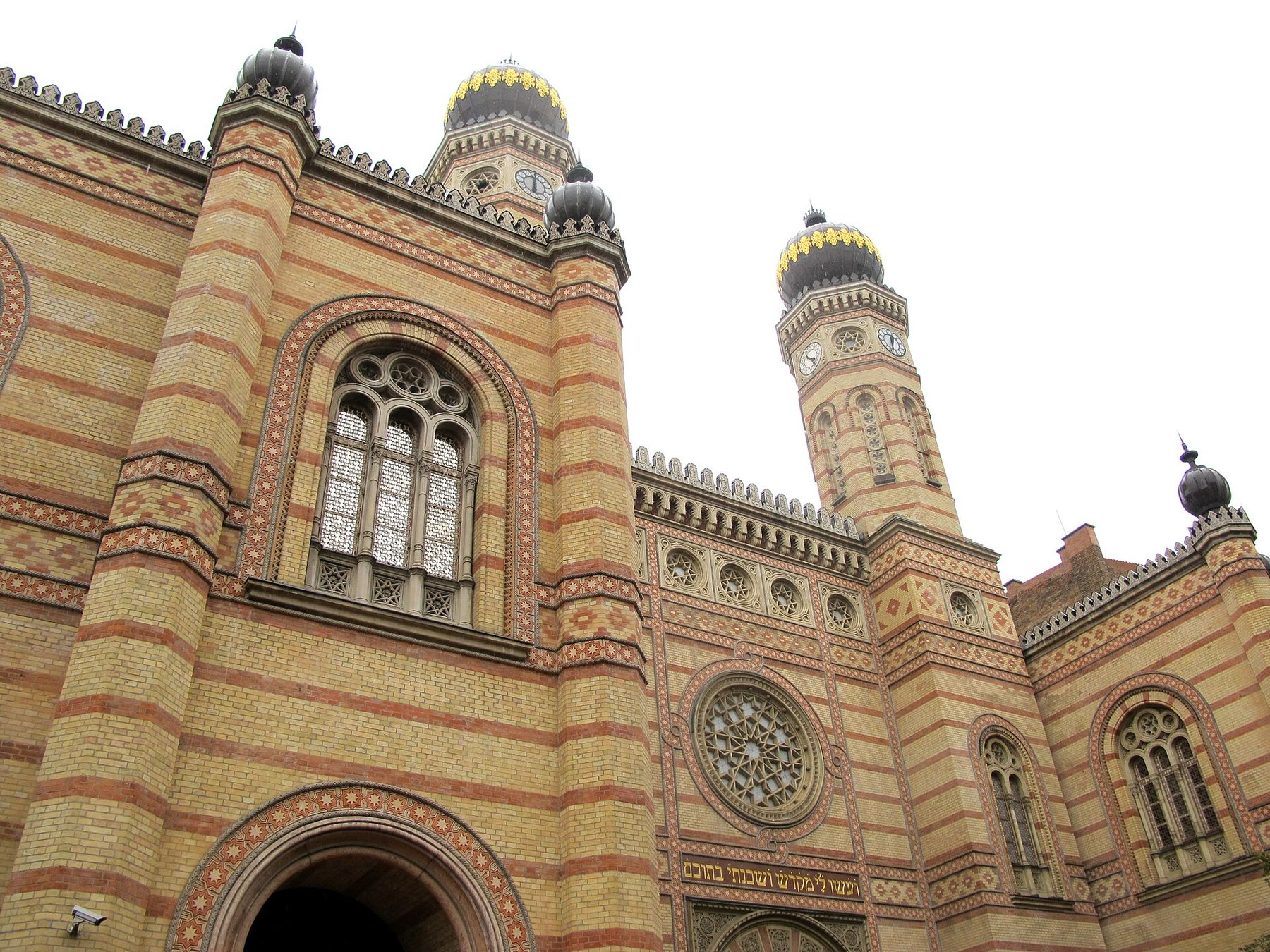
District VII, Erzsébetváros, lies just east of District V. Its older streets form the Jewish Quarter, around the Dohány Street Synagogue, and they are also the heart of what Budapest’s official tourism site calls the city’s party district. Budapest’s ruin bars began here in the early 2000s, when bars moved into empty tenement buildings awaiting renovation; Szimpla Kert on Kazinczy utca was one of the first.
That is the appeal and the warning. You will have restaurants, cafés and bars a few steps away, but streets such as Kazinczy utca stay lively late, and weekend nights can be loud. If you want to stay in District VII and still sleep, ask for a room facing the inner courtyard rather than the street, read recent reviews for comments on noise, and consider the quieter edges of the district, away from the main bar streets.
Choose District VII if you plan to eat out and go out most evenings, or are travelling with friends. Light sleepers can still make it work with a quiet, courtyard-facing room.
District VI: Andrássy út and a calmer central base
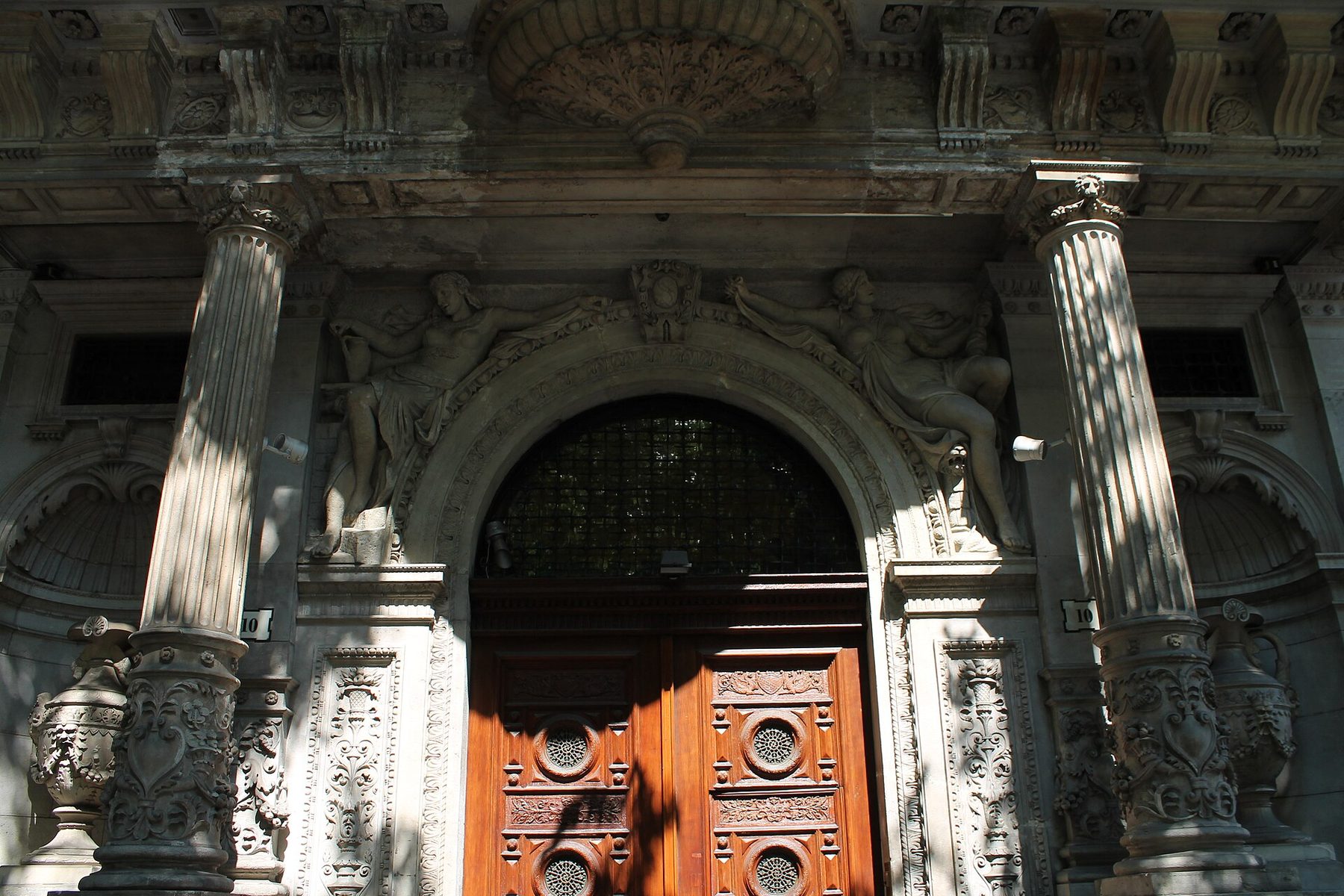
District VI, Terézváros, is built along Andrássy út, the grand avenue that runs from the city centre out to Heroes’ Square and City Park. UNESCO added the avenue to Budapest’s World Heritage site in 2002, together with the Millennium Underground beneath it, which UNESCO describes as the first underground railway in continental Europe. Today that line is metro M1, so a base near Andrássy út gives you a direct ride to Deák Ferenc tér in one direction and City Park in the other.
The area works well if District V feels too touristy but District VII too loud. The avenue itself carries traffic, so the quieter options are usually on the side streets a block or two away. The streets nearest District VII share some of its nightlife, so check the exact address.
Choose District VI if you want a central base with an easy metro line, plan to visit City Park or the Széchenyi baths, or are staying four nights or more.
District VIII: the Palace District as an alternative
Budapest’s official tourism site describes the Palace District as part of District VIII, Józsefváros, behind the Hungarian National Museum. It is bordered by the Kálvin tér, Astoria, Blaha Lujza tér and Corvin-negyed metro stations, and its cafés and terraces cluster around Mikszáth Kálmán tér and Krúdy utca. Two of those stations, Kálvin tér and Astoria, are also stops on the 100E airport bus.
It is smaller and more residential than the districts above, with fewer major sights inside it, but it puts you within walking distance of District V and the Danube. Conditions vary block by block in the wider District VIII, so stay close to the Palace District streets and the metro stations, and check reviews for the exact building.
Buda Castle Quarter: quiet and historic, but less convenient
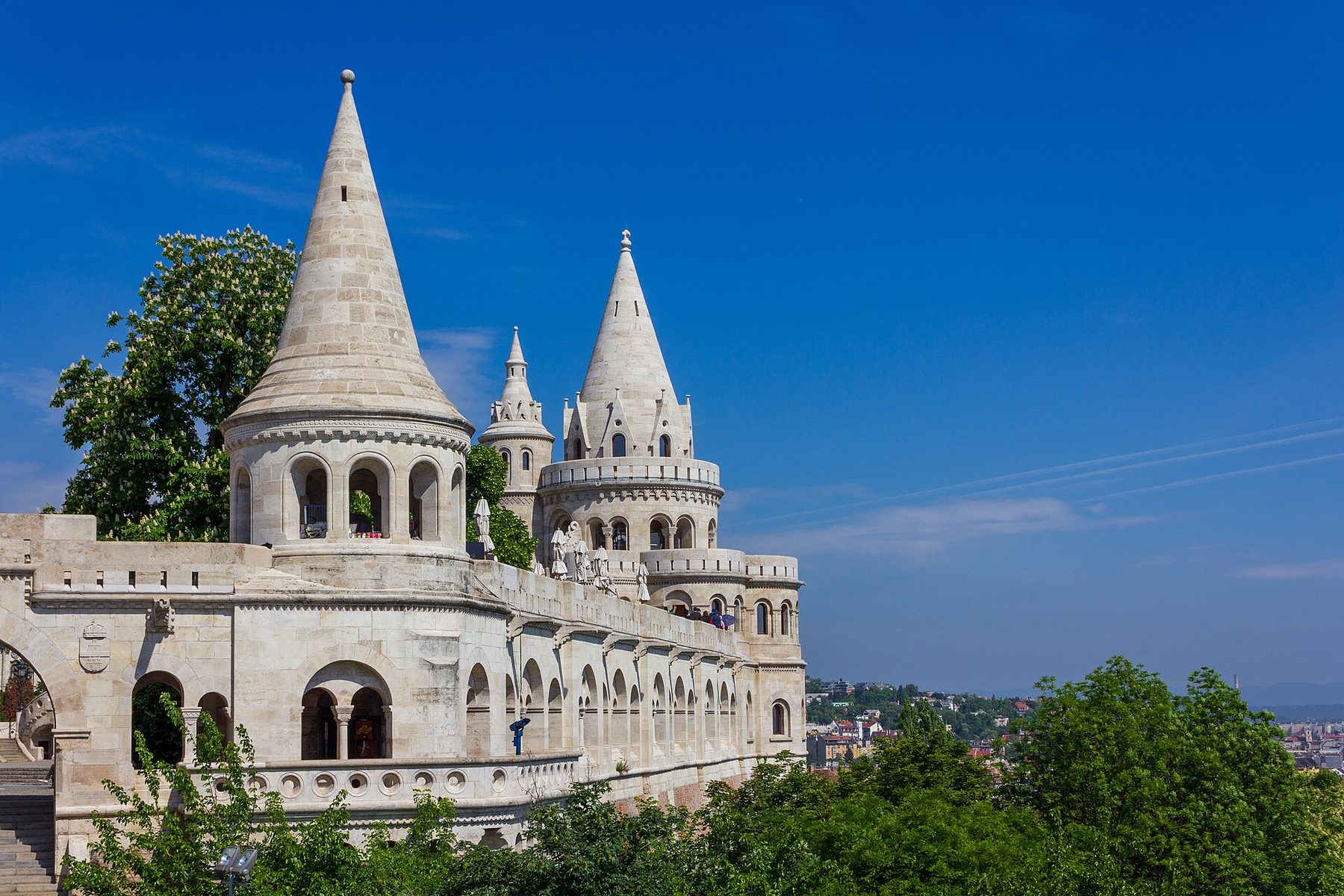
The Buda Castle Quarter in District I sits on a rocky spur above the Danube’s right bank. UNESCO describes its medieval and Baroque streets as distinct from the 19th-century architecture of Pest, and it is part of the same World Heritage site. Once the day visitors leave, the quarter is far quieter than central Pest.
The trade-off is access. The hilltop has no metro station, so every trip to Pest starts with a walk downhill, a bus or a funicular ride, and the airport journey is longer than from the Pest side. Places to stay inside the quarter are also limited. It suits a slower trip, a special-occasion stay or repeat visitors who already know Pest.
Choose the Castle Quarter if quiet evenings and the setting matter more than convenience, and you are happy to spend extra time getting around.
Getting from the airport to your base
Your choice of area changes the airport journey. According to Budapest Airport:
- 100E Airport Express runs around the clock between the airport and Deák Ferenc tér. On the way into the city it stops at Kálvin tér, Astoria and Deák Ferenc tér, which makes it the simplest option for Districts V, VII and VIII and the southern end of District VI. Buses run every 5–10 minutes during the day, every 10–15 minutes in the morning and evening, and every 20–40 minutes on average at night. You need a special 100E ticket; you can buy and validate it on board with a bank card through Budapest Pay&GO.
- Bus 200E links Terminal 2 with Kőbánya-Kispest, where you can change to metro M3. Ordinary BKK tickets and passes are valid, but the 100E ticket is not. At night the route is extended to Határ út, where night buses continue to the city centre.
For the Castle Quarter, a taxi to the door is often the most practical choice after a late arrival or with heavy luggage; the official airport taxi partner is listed on Budapest Airport’s website.
Before you book
- Check the exact street, not just the district. Each district has busy avenues and quiet side streets, and noise levels can change within a block.
- Ask about the room’s orientation. In Districts V, VI and VII, a courtyard-facing room is usually quieter than one on the street.
- Check for a lift. Many central buildings are older tenement houses, and not all have one.
- Compare the total price. Check whether local taxes and fees are already included in the price you are quoted or will be added at check-in.
How to decide
- First visit, two to four nights: District V, near the Danube or Deák Ferenc tér.
- Nightlife is a priority: District VII, with a courtyard-facing room if you want to sleep.
- Longer stay or a calmer central base: District VI, a block or two off Andrássy út near an M1 station.
- Local cafés and an easy airport bus: the Palace District in District VIII, near Kálvin tér or Astoria.
- Quiet and atmosphere over convenience: the Buda Castle Quarter.
Planning a soak while you are there? Our guide to which Budapest thermal bath to choose compares Széchenyi, Rudas and Lukács, and our Budapest airport to city centre guide covers the transfer in more detail.
Official sources
- Budapest Airport: 100E Airport Express and bus 200E
- Budapest Airport: official taxi partner
- UNESCO World Heritage Centre: Budapest, including the Banks of the Danube, the Buda Castle Quarter and Andrássy Avenue
- Budapest Info (official tourism site): ruin bars in Budapest
- Budapest Info (official tourism site): the Palace District
Transport services and visitor information were checked on 31 October 2026 and can change. Check the official pages before you travel.